Pool Equipment Ontario: What You Need to Keep Your Pool Clean and Clear
Pool equipment is the foundation of a clean, clear, and enjoyable swimming pool. In this guide, you'll learn how the essential pieces of pool equipment work together, what to look for when upgrading your system, and how to choose durable equipment that can withstand Ontario's hot summers and freezing winters.
- Why Quality Pool Equipment Matters in Ontario
- How Pool Equipment Works Together to Keep Water Clean
- Pool Pumps: The Heart of Your Pool System
- Sand Filters: Removing Dirt Before It Becomes a Problem
- Pool Chemistry Equipment: Keeping Water Safe and Balanced
- Why Circulation + Filtration + Sanitization Must Work Together
- Pool Heaters: Extend Your Ontario Swimming Season
- Choosing Pool Equipment That Can Handle Ontario Winters
- Environmental Rules Ontario Pool Owners Should Know
- Signs Your Pool Equipment May Need Repair or Replacement
- Frequently Asked Questions About Pool Equipment
If you're ready to extend your swimming season with a new pool heater, contact Generations Heating & Air Conditioning for expert advice and professional installation.
Key Takeaways: Pool Equipment
- Quality pool equipment is essential for maintaining clean, clear, and healthy water while reducing maintenance and repair costs over time.
- Ontario’s changing seasons create unique challenges for pool systems, making durable, properly sized equipment especially important for freeze protection and long-term performance.
- A pool pump, sand filter, heater, and sanitization system must work together as a complete circulation loop to keep water moving, filtered, heated, and safe for swimming.
- Sand filters remove dirt, debris, pollen, and organic contaminants before they impact water clarity and increase chemical demands.
- Pool chemistry equipment, including chlorinators, salt water systems, test kits, and pH monitoring tools, helps maintain balanced water that protects swimmers, equipment, and pool surfaces.
- Pool heaters allow Ontario homeowners to enjoy comfortable swimming earlier in the spring and later into the fall, maximizing the value of their pool investment.
- Choosing winter-ready pool equipment with corrosion-resistant and durable materials helps protect against Ontario’s freezing temperatures and freeze/thaw cycles.
- Proper winterization, seasonal maintenance, and regular equipment inspections help prevent damage and extend the lifespan of your pool system.
- Recognizing warning signs such as cloudy water, weak return jets, leaks, unusual pump noises, rising energy bills, and frequent algae growth can help prevent costly equipment failures.
- Investing in reliable pool equipment designed for Canadian climates helps create a more efficient, easier-to-maintain pool that lasts for years.
1. Why Quality Pool Equipment Matters in Ontario

Ontario's climate puts swimming pools through conditions that many warmer regions simply don't experience. While pool owners in southern climates often operate their systems year-round, Ontario homeowners must prepare their equipment for freezing temperatures, seasonal shutdowns, and dramatic weather changes. Choosing high-quality, properly sized pool equipment helps ensure your system performs reliably, lasts longer, and requires fewer repairs over time.
Ontario's Climate Creates Unique Challenges for Pool Equipment
Every season brings different demands that can affect your pool's performance and the lifespan of its equipment. Understanding these challenges makes it easier to appreciate why investing in durable components is so important.
- Long winter shutdowns mean pool equipment sits unused for several months, making proper winterization essential to prevent damage when freezing temperatures arrive.
- Freeze/thaw cycles can place significant stress on pumps, filters, plumbing, and other components if water is not completely drained before winter.
- Heavy spring debris, including leaves, pollen, seeds, and dirt, increases the workload on your pump and sand filter as you prepare your pool for swimming season.
- Hot, humid summer weather encourages algae growth, requiring your circulation system and water chemistry equipment to work efficiently to keep the water clean and safe.
- Seasonal opening and closing place additional wear on pool equipment, as components must be inspected, cleaned, started up, and winterized every year.
These seasonal conditions mean Ontario pool equipment must be able to handle both months of inactivity and periods of heavy use without sacrificing performance.
Durable Equipment Delivers Better Long-Term Value
Although premium pool equipment may cost more upfront, it often provides better value over its lifetime. Well-built components are designed to withstand Ontario's demanding weather conditions while maintaining efficient operation season after season.
Investing in quality equipment offers several long-term benefits including:
- Durable pumps, filters, and plumbing components are less likely to crack or fail after repeated freeze/thaw cycles.
- Properly sized equipment circulates and filters water more efficiently, helping maintain clearer water with less effort.
- Energy-efficient pumps can reduce electricity consumption while still providing the circulation needed for healthy pool water.
- Reliable filtration systems remove debris more effectively, reducing the amount of time spent vacuuming and balancing water chemistry.
- High-quality equipment typically requires fewer repairs and can provide many years of dependable performance when properly maintained.
Selecting equipment that matches the size and needs of your pool is just as important as choosing durable products. Oversized or undersized equipment can increase operating costs, reduce efficiency, and place unnecessary strain on your entire pool system.
By investing in well-built, properly sized pool equipment, you can enjoy cleaner water, lower maintenance costs, and greater peace of mind throughout every swimming season.
2. How Pool Equipment Works Together to Keep Water Clean
Clear, healthy pool water doesn't happen by chance. Your pool equipment works together as a complete circulation system, with each component performing a specific job to keep the water clean, balanced, and comfortable for swimming. If one part of the system isn't working properly, the entire pool can suffer from cloudy water, algae growth, or poor water quality.
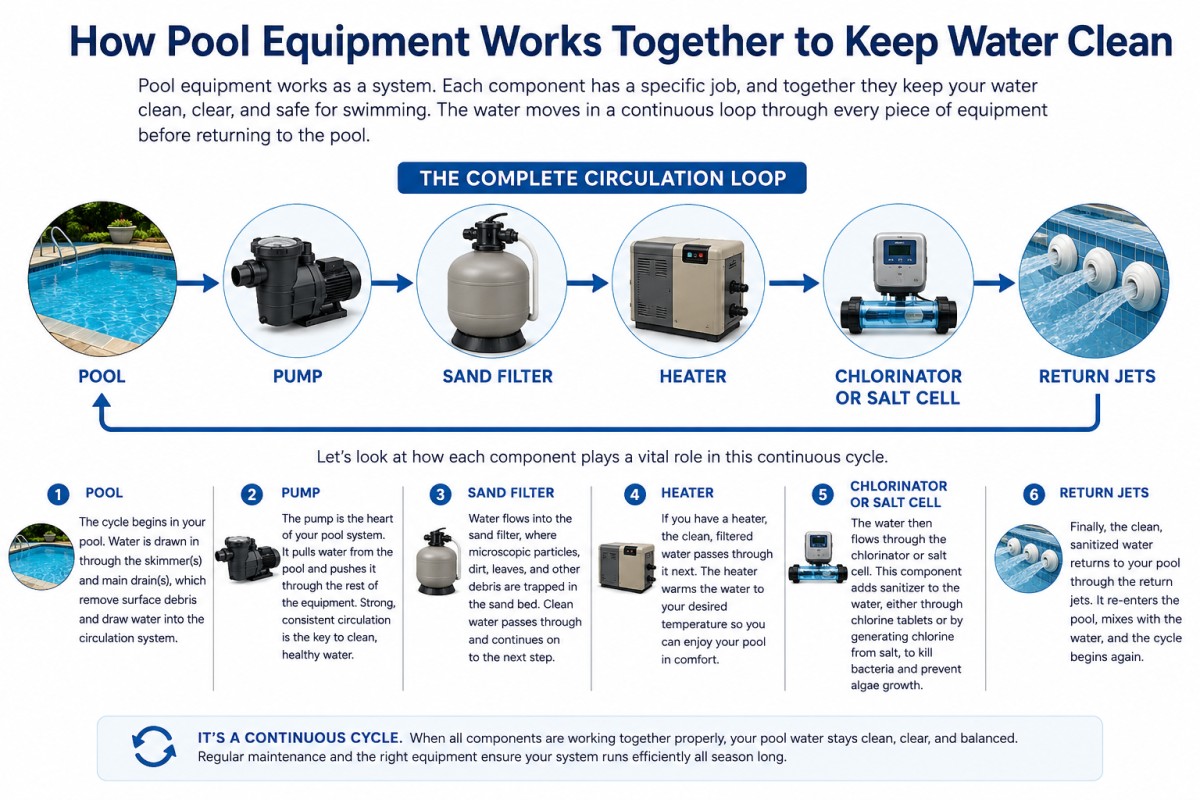
The following infographic explains how your pool equipment operates together to make sure that the water in your pool stays clean and healthy. Read on to discover more about each individual step.
The Pool Equipment Circulation Loop
Water is constantly moving through your pool's equipment in a continuous cycle that removes debris, sanitizes the water, and returns it to the pool.
The complete circulation loop looks like this:
Pool → Pump → Sand Filter → Heater → Chlorinator or Salt Cell → Return Jets → Pool
Each piece of equipment relies on the others to do its job effectively. Here's how the process works from start to finish.
Step 1: Water Leaves the Pool
The circulation cycle begins when water is drawn from the pool through the skimmers and main drain. The skimmers collect floating debris like leaves, insects, and pollen, while the main drain helps pull water from the deeper areas of the pool.
Once the water leaves the pool, it travels through the plumbing toward the pump.
Step 2: The Pump Keeps Water Moving
The pool pump is often called the heart of the pool system because it creates the circulation needed for every other piece of equipment to function. By pulling water through the plumbing and pushing it through the equipment, the pump ensures the entire pool is continuously cleaned and treated.
Without proper circulation, debris settles, chemicals become unevenly distributed, and algae can begin to grow.
Step 3: The Sand Filter Removes Dirt and Debris
After leaving the pump, the water enters the sand filter, where dirt, dust, pollen, leaves, insects, and other fine particles are trapped within the filter media.
As water passes through the sand bed, unwanted debris is removed before the clean water continues through the rest of the system. Regular backwashing helps keep the filter operating efficiently and maintains strong water flow.
Step 4: The Heater Warms the Clean Water
If your pool is equipped with a heater, the filtered water passes through it next. Heating the water after filtration helps protect the heater from unnecessary debris and allows it to operate more efficiently.
Many Ontario homeowners install a pool heater to enjoy comfortable swimming temperatures earlier in the spring and later into the fall.
Step 5: The Chlorinator or Salt Cell Sanitizes the Water
Once the water has been filtered and heated, it moves through the sanitizing equipment.
Depending on your pool, this may include:
- An inline chlorinator that slowly dissolves chlorine tablets to maintain consistent sanitizer levels.
- A salt water chlorination system that converts dissolved salt into chlorine to continuously disinfect the water.
Both systems help destroy bacteria, viruses, and algae while keeping the water safe and clear throughout the swimming season.
Step 6: Clean Water Returns to the Pool
Finally, the clean, filtered, heated, and sanitized water flows back into the pool through the return jets. These jets help distribute treated water evenly throughout the pool while creating circulation that prevents stagnant areas where algae and bacteria can develop.
The cycle then begins again, operating continuously while the pool pump is running.
Every Component Plays an Important Role
Although each piece of equipment performs a different function, they all work together to maintain healthy pool water.
- The pump keeps the water moving through the system.
- The sand filter removes dirt and microscopic debris.
- The heater provides comfortable swimming temperatures without affecting water quality.
- The chlorinator or salt cell continuously sanitizes the water to prevent algae and harmful bacteria.
- The return jets evenly distribute clean, treated water throughout the pool.
When every component is operating efficiently, your pool stays cleaner, requires fewer chemicals, and is easier to maintain. Regular inspections and routine maintenance help ensure the entire circulation system continues working together to keep your water crystal clear all season long.
3. Pool Pumps: The Heart of Your Pool System
A pool pump is often called the heart of your pool system because it keeps water moving through every other piece of equipment. Without proper circulation, your filter cannot remove debris, your sanitizer cannot effectively kill bacteria and algae, and your heater cannot warm the water efficiently.
A reliable pool pump ensures that clean, treated water is continuously circulated throughout your pool, making it one of the most important investments for maintaining healthy water.
How a Pool Pump Works
The pool pump creates the circulation that powers your entire filtration system. It pulls water from the pool through the skimmers and main drain before pushing it through the filter, heater, and sanitizing equipment. Once the water has been cleaned and treated, it returns to the pool through the return jets to begin the cycle again.
A properly functioning pool pump helps:
- Continuously circulate water throughout the entire pool to prevent stagnant areas.
- Move water through the filtration system so dirt and debris can be removed.
- Distribute chlorine and other pool chemicals evenly to maintain balanced water chemistry.
- Deliver consistent water flow through heaters and other equipment for optimal performance.
Without adequate circulation, even the best filtration and sanitization systems cannot perform as intended.
Choosing the Right Pool Pump
Not every pool requires the same size or type of pump. Selecting a properly sized pump is essential for maintaining efficient circulation while avoiding unnecessary energy costs.
When choosing a pool pump, consider factors such as:
- The size and volume of your pool.
- The length and complexity of your plumbing system.
- Whether your pool includes features such as waterfalls, spas, or water slides that require additional flow.
- Your desired level of energy efficiency and operating costs.
Many homeowners today choose variable-speed pumps because they can adjust their speed based on the pool's needs, providing excellent performance while using significantly less electricity than traditional single-speed models.
A properly sized pump delivers consistent circulation without wasting energy or placing unnecessary strain on the rest of your equipment.
Signs Your Pool Pump May Need Service
Like any mechanical equipment, pool pumps experience wear over time. Identifying problems early can help prevent larger repairs and keep your pool operating efficiently throughout the swimming season.
You may need to service or inspect your pool pump if you notice any of the following signs.
- Water flow from the return jets becomes noticeably weaker.
- The pump begins making grinding, squealing, rattling, or unusually loud noises.
- Air bubbles appear in the return jets, indicating a possible suction-side air leak.
- The pump struggles to maintain prime or loses prime frequently.
- Water is leaking around the pump housing, seals, or plumbing connections.
- Your pool water becomes cloudy despite having clean filters and balanced water chemistry.
- Your electricity bills increase unexpectedly because the pump is operating inefficiently.
Routine inspections and prompt repairs can help prevent small issues from developing into costly equipment failures.
Ontario Pools Place Extra Demands on Pool Pumps
Ontario's changing seasons require pool pumps to perform under a wide variety of conditions. From heavy spring debris to hot summer weather and annual winter shutdowns, pumps experience significant seasonal stress.
Some of the most common challenges include:
- Heavy spring pollen, leaves, and seeds increase the amount of debris the pump must circulate and filter.
- Hot summer temperatures and increased swimmer activity require longer pump run times to maintain water quality.
- Severe thunderstorms can introduce large amounts of dirt and organic material that place additional strain on the circulation system.
- Seasonal opening and closing require pumps to be inspected, cleaned, properly drained, and winterized to prevent freeze damage.
These seasonal demands make routine maintenance especially important for Ontario homeowners who want dependable performance year after year.
A properly maintained pool pump keeps water circulating efficiently, allowing every other piece of pool equipment to do its job effectively. By choosing the right pump, performing regular maintenance, and addressing small issues before they become major problems, you'll enjoy cleaner water, lower operating costs, and a more reliable pool system throughout the swimming season.
4. Sand Filters: Removing Dirt Before It Becomes a Problem
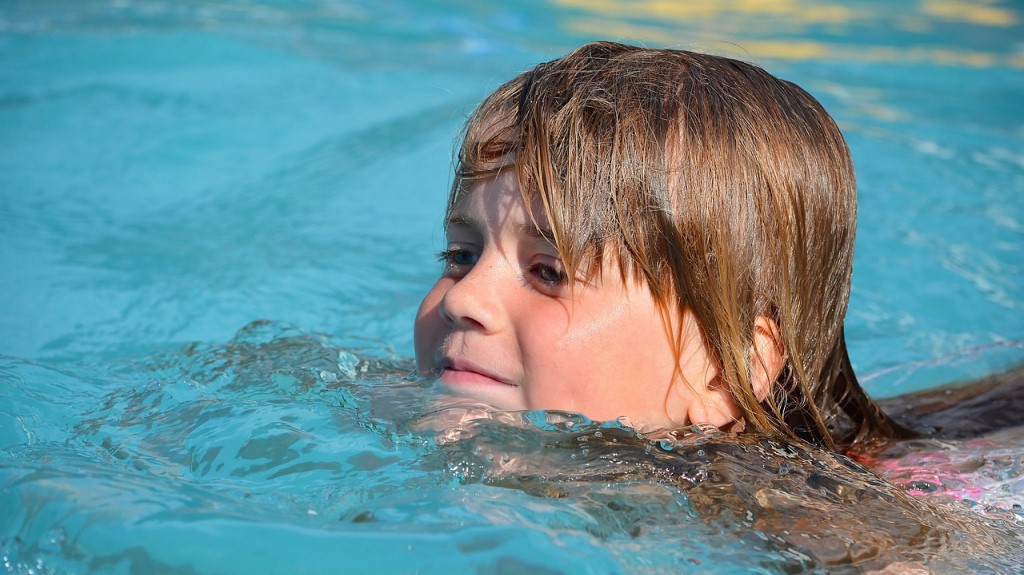
A sand filter is one of the most important pieces of pool equipment because it removes dirt and debris before they have a chance to cloud your water or affect its chemistry.
Working alongside your pool pump, the sand filter continuously cleans the circulating water, helping you maintain a sparkling pool with less effort throughout the swimming season.
How a Sand Filter Works
As water leaves the pool, the pump pushes it into the sand filter. Inside the filter is a specially graded bed of filter sand that traps unwanted particles while allowing clean water to pass through and continue through the rest of the circulation system.
Most residential sand filters can capture particles as small as 20 to 40 microns, which is fine enough to remove many of the contaminants that make pool water appear cloudy.
A properly functioning sand filter helps remove:
- Leaves, insects, and other visible debris before they break down in the water.
- Pollen, dirt, and dust that can make pool water look dull or hazy.
- Small organic particles that contribute to algae growth and increased chlorine demand.
- Debris washed into the pool during rainstorms or windy weather.
By removing these contaminants on a continuous basis, the sand filter helps reduce the workload on your sanitizing system while improving overall water quality.
Why Backwashing Is Important
As the filter captures more debris, water flow gradually becomes restricted. When this happens, the filter needs to be backwashed, a process that reverses the direction of water flow to flush trapped dirt and debris out through the waste line.
Regular backwashing provides several important benefits.
- It restores proper water flow through the filtration system.
- It prevents excessive pressure from building inside the filter.
- It improves filtration efficiency by removing accumulated debris.
- It helps maintain clear water by allowing the filter to continue trapping fine particles effectively.
Many pool owners monitor the pressure gauge on their filter and perform a backwash whenever the pressure rises approximately 8 to 10 PSI above the normal operating level.
When Should Filter Sand Be Replaced?
Although the sand itself is durable, it gradually becomes smoother over time and loses its ability to trap fine particles effectively. For most residential pools, replacing the filter sand every 5 to 7 years helps maintain peak filtration performance.
You may also need to service or inspect your sand filter if you notice any of the following signs.
- Your pool water remains cloudy even though the water chemistry is properly balanced.
- The filter pressure remains unusually high or low after backwashing.
- Water flow from the return jets becomes noticeably weaker.
- The filter requires more frequent backwashing than it did in previous seasons.
- You notice sand returning to the pool, which may indicate damaged internal components.
Routine inspections help identify these issues before they lead to more significant water quality problems.
Ontario Pools Put Extra Demands on Sand Filters
Ontario's climate creates unique filtration challenges throughout the year. Spring and summer often bring a constant supply of organic debris that places additional strain on pool filters.
Some of the most common seasonal challenges include:
- Heavy spring pollen coats the surface of the pool and quickly clogs filters if it is not removed regularly.
- Maple keys, seeds, blossoms, and leaves add large amounts of organic debris during the spring and early summer.
- Trees surrounding many Ontario backyards continuously drop leaves, twigs, and other debris throughout the swimming season.
- Heavy rainstorms and storm runoff can wash dirt, dust, and other contaminants into the pool, increasing the workload on the filtration system.
These seasonal conditions make regular filter maintenance especially important if you want to keep your pool clean and inviting.
A clean, properly maintained sand filter removes contaminants before they become bigger problems, helping your pump, sanitizer, and other pool equipment operate more efficiently. By keeping your filter in good condition and replacing the sand when needed, you'll enjoy clearer water, lower maintenance requirements, and a healthier pool all season long.
5. Pool Chemistry Equipment: Keeping Water Safe and Balanced
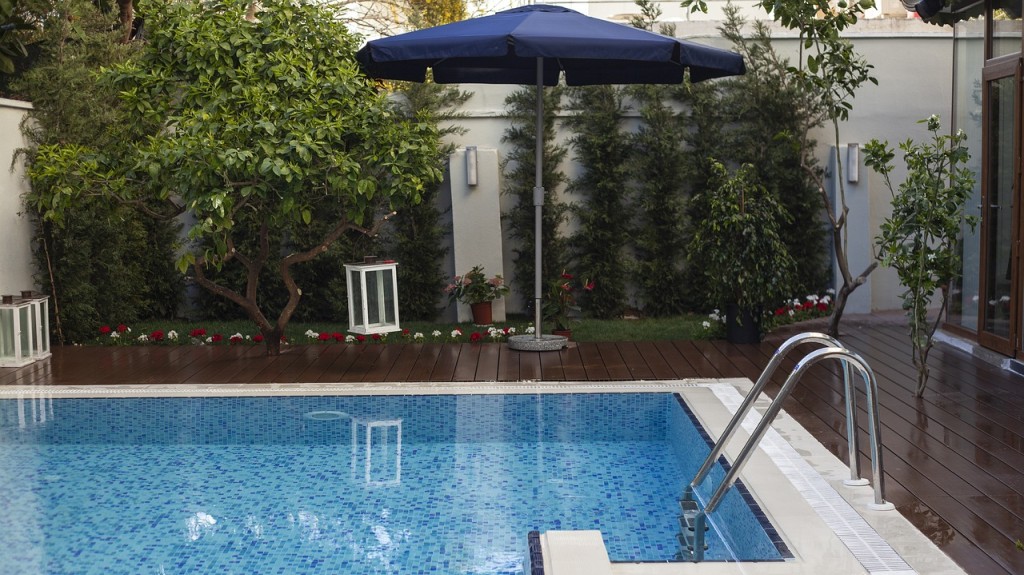
Maintaining proper pool chemistry requires more than just running the pump and keeping water circulating, because circulation alone cannot guarantee that sanitizers are evenly distributed or that water chemistry stays balanced over time. This is why dedicated pool chemistry equipment plays a big role in keeping water clean, safe, and comfortable for swimmers.
Chlorinators: Controlled Chlorine Delivery
Chlorinators are one of the most common tools used to automate sanitization and ensure that chlorine levels remain consistent in the pool.
Inline chlorinators, in particular, are installed directly into the pool’s plumbing system so they can deliver chlorine as water passes through the circulation line. They are designed to provide a steady and predictable dosage rather than relying on manual application.
- Inline chlorinators provide a slow, consistent release of chlorine into the pool water as it flows through the system.
- They help maintain more stable chlorine levels, reducing the risk of sudden spikes or drops in sanitation.
- They minimize the need for frequent manual dosing, making routine maintenance easier for pool owners.
Inline chlorinators are especially useful for homeowners who want reliable sanitization with minimal day-to-day intervention.
Salt Water Chlorination Systems
Salt water chlorination systems offer an alternative approach to traditional chlorine addition by generating chlorine directly from dissolved salt in the pool water.
These systems use a salt cell, which converts salt into chlorine through an electrochemical process as water passes through the unit. This means the pool continuously produces its own sanitizer rather than relying on external chlorine products.
- Salt cells generate chlorine by converting dissolved salt in the water through a process called electrolysis.
- They provide a steady, automated supply of chlorine without the need for regular manual addition of tablets or liquid chlorine.
- They often reduce ongoing maintenance requirements compared to traditional chlorination systems.
- They create a softer-feeling swimming experience that many users find more comfortable on skin and eyes.
Salt water systems are popular because they simplify maintenance while still maintaining consistent sanitation levels.
Supporting Pool Chemistry Equipment
Beyond chlorinators and salt systems, several other tools help pool owners maintain balanced water chemistry and prevent common issues before they develop.
- Test kits are essential because they allow pool owners to regularly measure chlorine, pH, alkalinity, and other key water balance factors.
- Automatic chemical feeders help maintain consistent dosing of chemicals such as chlorine or pH adjusters, reducing fluctuations caused by manual application.
- pH monitoring systems provide ongoing feedback about acidity levels in the water, helping prevent conditions that can lead to scaling or corrosion.
Together, these tools create a more controlled and predictable pool environment by reducing guesswork and improving response time to chemical imbalances.
Why Balanced Chemistry Matters
Proper pool chemistry is essential not only for water clarity but also for protecting swimmers, equipment, and the pool itself from long-term damage.
When chemistry is properly balanced:
- Swimmers are protected from irritation to the skin, eyes, and respiratory system caused by improper chlorine or pH levels.
- Pool equipment such as pumps, heaters, and filters experiences less corrosion and scaling, extending operational lifespan.
- Pool surfaces, including liners, tile, and plaster, are preserved from staining, etching, and deterioration.
Maintaining balanced chemistry ensures that the entire pool system operates safely, efficiently, and with fewer costly repairs over time.
6. Why Circulation + Filtration + Sanitization Must Work Together
A swimming pool only stays clean and safe when circulation, filtration, and sanitization operate as a connected system rather than separate functions. This interconnected process is often referred to as the “equipment loop,” where each stage depends on the others to maintain healthy water conditions.
The Pool “Equipment Loop”
The equipment loop describes how water continuously moves through the pool system to be cleaned, treated, and returned in a safe condition. Each step plays a specific role in maintaining water quality.
The basic process works as follows:
- The pump circulates water from the pool through the plumbing system.
- The filter removes dirt, debris, and suspended particles from the water.
- The sanitizer neutralizes bacteria, algae, and other harmful contaminants.
- The clean, treated water is then returned back into the pool.
This cycle repeats continuously, ensuring that the entire body of water is consistently cleaned and protected as it moves through the system.
When all four stages work together properly, the pool remains clear, balanced, and safe for regular use.
What Happens When One Component Fails
When even one part of the equipment loop is not functioning correctly, the entire system becomes unbalanced and water quality begins to decline quickly. Each component depends on the others to maintain overall effectiveness.
Common issues that can occur when a component fails include:
- A weak pump reduces water circulation, which prevents proper distribution of chemicals and leaves stagnant areas in the pool.
- A dirty or clogged filter allows debris and fine particles to remain in the water, reducing clarity and efficiency of the system.
- Low chlorine levels allow bacteria and algae to grow unchecked, increasing health risks for swimmers.
- Cloudy water develops when contaminants are not properly removed or sanitized by the system.
- Algae blooms can form rapidly when circulation and sanitization are both insufficient.
These problems often escalate quickly because one failure places additional strain on the remaining parts of the system.
Why System Balance Is Essential
The effectiveness of a pool depends on all three core systems working in harmony. Circulation ensures water is moving, filtration removes physical contaminants, and sanitization eliminates biological threats. When any one of these is compromised, the overall system cannot maintain safe or clear water conditions.
A properly balanced equipment loop ensures that pool water remains consistently clean, clear, and safe for swimmers while reducing strain on equipment and minimizing long-term maintenance issues.
7. Pool Heaters: Extend Your Ontario Swimming Season
In Ontario, where swimming weather can be limited by cool spring and early fall temperatures, many homeowners install pool heaters to get more consistent use and greater value from their backyard pool. A heater allows the swimming season to extend well beyond the hottest summer weeks by keeping water at a comfortable and controlled temperature.
Why Ontario Homeowners Install Pool Heaters
Pool heaters are especially popular in Ontario because the natural swimming season is relatively short, and water temperatures can drop quickly even during otherwise sunny months. A heater helps stabilize conditions so the pool remains comfortable for longer periods of the year.
Installing a pool heater provides several key benefits:
- Pool heaters allow for comfortable swimming in the spring when air temperatures may be warm but the water is still too cold.
- Pool heaters extend the swimming season into the fall when evenings cool down and water temperatures begin to drop.
- Pool heaters increase the overall value of the pool by maximizing how often it can be used throughout the year.
These advantages make heating systems a practical upgrade for homeowners who want to get more consistent enjoyment from their pool investment.
Learn more about choosing the right heating system on our Pool Heater Installation page.
Higher Costs from Emergency Repairs
Waiting until something breaks often turns a simple fix into a more expensive emergency service call.
- You risk facing emergency repair costs that are typically higher than scheduled maintenance or early diagnostics.
- You may also experience longer wait times, which can further delay getting your pool back in working order.
Addressing issues early helps you avoid unnecessary expenses and stressful last-minute repairs.
Types of Pool Heaters
Different heating systems are available depending on budget, efficiency goals, and how often the pool is used throughout the season.
Gas Pool Heaters
Gas pool heaters are one of the fastest ways to heat pool water and are commonly used by homeowners who want quick temperature control.
- Gas heaters heat pool water rapidly, making them ideal for situations where the pool is not used every day but needs to warm up quickly before use.
- They perform well even in cooler outdoor temperatures, which makes them a strong option for early spring or late fall swimming.
- They provide consistent heating regardless of air temperature, offering reliable performance when fast results are needed.
Gas heaters are best suited for homeowners who prioritize speed and flexibility in heating their pool.
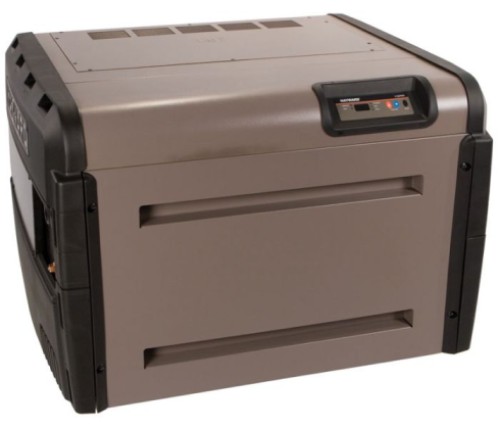
Heat Pumps
Heat pumps are a more energy-efficient option that work by extracting warmth from the surrounding air and transferring it into the pool water.
- Heat pumps operate by capturing heat from the outside air and using it to gradually warm the pool water.
- They are more energy-efficient than gas heaters, which can lead to lower long-term operating costs.
- They perform best in moderate temperatures and are ideal for maintaining steady warmth over longer swimming periods.
Heat pumps are a strong choice for homeowners who want efficient, consistent heating throughout the extended swimming season.
Making the Most of Your Swimming Season
Pool heaters give you the ability to take control of your swimming season rather than being limited by weather conditions. Whether using a fast-acting gas heater or an energy-efficient heat pump, heating systems help ensure the pool remains comfortable, usable, and enjoyable for more months of the year.
8. Choosing Pool Equipment That Can Handle Ontario Winters
Ontario’s long, cold winters create unique challenges for pool owners, and choosing equipment that is built for freezing temperatures is essential for avoiding costly damage and premature system failure. Local conditions such as repeated freeze, thaw cycles can put significant stress on pool components, making durability and winter readiness a key part of any installation decision.
The Risks of Ontario Winter Conditions
Cold weather introduces several risks that can seriously damage pool systems if the equipment is not properly designed or prepared for winter conditions. Understanding these risks helps explain why winter-rated equipment is so important in this climate.
The most common winter-related issues include:
- Freeze damage can occur when water remains inside pipes or equipment and expands as it freezes, leading to cracks or ruptures.
- Expansion cracking can affect rigid components such as plumbing lines, pump housings, and filters when ice formation forces materials to expand beyond their limits.
- Corrosion increases during seasonal transitions when moisture, salt, and fluctuating temperatures accelerate wear on metal parts.
These issues can result in expensive repairs and even full equipment replacement if proper precautions are not taken.
Seasonal Draining and Winterization
Proper winter preparation is one of the most important steps in protecting pool equipment in Ontario. Seasonal draining and winterization procedures help ensure that no water is left in vulnerable areas of the system where it could freeze.
Effective winterization typically involves:
- Removing water from plumbing lines and equipment to prevent internal freezing and expansion damage.
- Lowering water levels to a safe point so that ice formation does not affect skimmers or tile lines.
- Adding winterizing plugs and covers to protect openings from debris and moisture infiltration.
Proper winterization significantly reduces the risk of structural damage and helps ensure a smoother start-up in the spring.
Materials Built for Canadian Conditions
Equipment durability is especially important in regions with harsh seasonal changes, and choosing materials designed for Canadian climates can make a significant difference in long-term performance.
Key material considerations include:
- Corrosion-resistant components that can withstand moisture, chemicals, and fluctuating temperatures without deteriorating quickly.
- UV-resistant materials that prevent degradation from strong summer sun exposure, which can weaken plastic and rubber parts over time.
- Heavy-duty construction designed to handle repeated freeze–thaw cycles without cracking or warping.
These features help ensure that pool equipment remains reliable year after year despite extreme seasonal variation.
Investing in Equipment Built for Ontario Winters
When selecting pool equipment, you'll benefit from choosing systems specifically designed to handle freezing temperatures and seasonal stress. Higher-quality, winter-ready equipment reduces the risk of damage, lowers long-term maintenance costs, and ensures more reliable performance throughout the swimming season and beyond.
Investing in durable, Canadian-ready equipment ultimately provides better protection, greater peace of mind, and a longer lifespan for your entire pool system.
9. Environmental Rules Ontario Pool Owners Should Know
Pool maintenance in Ontario comes with important environmental responsibilities, especially when it comes to draining or discharging pool water. Understanding local rules helps protect waterways, avoid fines, and ensure that pool care practices remain safe for the surrounding environment.
Why Pool Water Disposal Matters
Pool water is often treated with chlorine and other chemicals that can be harmful if released directly into the environment. Improper disposal can negatively affect local ecosystems, particularly when large volumes of treated water enter natural drainage systems.
Key environmental concerns include:
- Chlorinated pool water should never be drained directly into storm drains because it can flow untreated into rivers, lakes, and wetlands.
- Improper discharge of chemically treated water can harm aquatic life and disrupt local ecosystems by introducing toxic levels of chlorine or other pool additives.
- Many Ontario municipalities have specific bylaws that regulate how and where pool water can be safely discharged.
These rules exist to protect local water systems and ensure that chemical-treated water is properly managed before entering the environment.
Special Considerations for Salt Water Pools
Salt water pool systems introduce additional environmental considerations because of the presence of chloride in the water. While salt levels in pools are relatively low compared to seawater, they can still have an impact when discharged in large volumes.
Salt water pool owners should be aware that:
- Chloride discharge from salt water pools can contribute to soil and water salinity issues if released improperly.
- Some municipalities have stricter guidelines for salt water pool drainage due to potential long-term environmental effects.
- Additional precautions may be required to ensure that salt levels are reduced or properly diluted before discharge.
Because of these factors, salt water pool owners should always verify local requirements before draining their systems.
Responsible Drainage Practices for Ontario Homeowners
Following proper procedures when draining a pool helps protect the environment and ensures compliance with local regulations. Homeowners are encouraged to take a proactive approach rather than assuming that all discharge methods are acceptable.
Recommended steps include:
- Checking municipal bylaws before draining a pool to confirm approved disposal methods and any seasonal restrictions.
- Neutralizing chlorine levels when required so that discharged water does not exceed safe chemical thresholds.
- Using approved discharge methods such as sanitary sewer connections or designated drainage points as directed by local authorities.
These steps help ensure that pool maintenance is carried out responsibly and in accordance with environmental standards.
10. Signs Your Pool Equipment May Need Repair or Replacement
Even well-maintained pool equipment will eventually wear out. Recognizing the early warning signs of a problem can help you address minor issues before they lead to expensive repairs, equipment failure, or prolonged pool downtime.
Common Warning Signs to Watch For
Many equipment problems begin with subtle changes in water quality or system performance. Paying attention to these symptoms can help you determine when it's time to have your pool equipment inspected.
Some of the most common warning signs include:
- Cloudy water may indicate that the filter is no longer removing fine particles effectively or that water circulation has been compromised.
- Weak return jets often suggest that the pump is losing efficiency, the filter is clogged, or there is a blockage somewhere in the plumbing system.
- Higher-than-normal energy bills can be a sign that pumps, heaters, or other equipment are working harder than they should because of mechanical problems or reduced efficiency.
- Unusual pump noises, such as grinding, rattling, or squealing, may indicate worn bearings, motor issues, or debris affecting the impeller.
- Frequent algae growth can occur when circulation, filtration, or sanitization systems are no longer operating effectively.
- Poor filtration that allows dirt and debris to remain suspended in the water may point to a clogged, damaged, or aging filter.
- Visible leaks around pumps, filters, heaters, or plumbing connections should be addressed promptly to prevent water loss and equipment damage.
- Constant chemical adjustments may indicate that poor circulation or malfunctioning equipment is preventing chemicals from being distributed evenly throughout the pool.
While any one of these symptoms may have a simple explanation, persistent problems often indicate that one or more pieces of equipment require professional attention.
Repair or Replace?
Not every equipment issue means a full replacement is necessary. In many cases, replacing a seal, valve, pressure gauge, motor component, or filter media can restore proper performance. However, older equipment that experiences repeated breakdowns or declining efficiency may be more cost-effective to replace.
Factors that often point toward replacement include:
- The equipment requires frequent repairs that continue to increase in cost.
- Replacement parts have become difficult to obtain because the equipment is outdated.
- The system consumes significantly more energy than newer, high-efficiency models.
- Performance continues to decline even after routine maintenance or repairs have been completed.
A professional inspection can help determine whether repairing the existing equipment or upgrading to a newer system offers the best long-term value.
Don't Ignore Small Problems
Small issues rarely resolve themselves and often become more expensive over time. Addressing unusual noises, declining water quality, leaks, or inconsistent system performance early can help prevent additional damage to pumps, filters, heaters, and other pool equipment.
Routine inspections and timely repairs help keep your pool operating efficiently, maintain clear and healthy water, and extend the lifespan of your entire pool system.
Trust Generations Heating & Air Conditioning for All Your Pool Heating Requirements
Whether you're installing a new pool heater, replacing an older unit, or looking for ways to extend your swimming season, the experienced team at Generations Heating & Air Conditioning is here to help. We can recommend the right gas pool heater or heat pump for your pool, provide professional installation, perform routine maintenance, and upgrade existing equipment to improve comfort and energy efficiency.
Contact Generations Heating & Air Conditioning today to speak with one of our pool heating specialists. We'll help you choose the best solution for your pool, your budget, and the Ontario climate so you can enjoy warm, comfortable swimming for more months of the year.
Reasons to Choose Generations:
If it's the comfort of your house that you're concerned about, you want to work with a company you can trust. At Generations Heating & Air Conditioning, we pride ourselves on offering professional advice, honest service, and dependable help from start to finish.
Local Experts Serving Kitchener and Beyond
We know Kitchener's weather and home styles inside and out. Our recommendations are based on hands-on experience here, not guesswork.
Friendly, Knowledgeable Technicians
Our service pros are highly trained technicians who care about you and your home. We take the time to clearly explain your options and answer your questions so that you feel confident making every decision.
No Pushy Sales Tricks, Just Honest Advice
You'll never be pressured into buying something you don't need. We prioritize what's best for you and your home, not what's easiest to sell.
Start-to-Finish Service
From the moment you receive your quote to long after your new system is installed, we're with you. Expect clear communication, tidy work, and follow-up service you can trust.
Ready to experience the Generations difference? Book a free consultation today and get the best home comfort for your needs and budget.

What Our Customers Are Saying...
"We trust Generations to maintain our HVAC system. Their service is prompt, professional, and friendly. They are also very genuine when it comes to purchases, explaining the pros and cons of each model, with zero pressure/upselling.
If you’re looking for an honest, reliable HVAC company that genuinely cares about its customers, then Generations fits the bill."
-Michele A.
"What a great team - they installed our pool heater this summer....and now just came to the rescue when our furnace broke in the dead of winter in the middle of the night - found a board and replaced it right away. Great nice friendly and efficient service."
-Alison Wills
"I had a problem with my millivolt pool heater. I called Generations Heating and A/C They came within two days, Rob the technician was polite, professional and very competent. He had the problem solved in no time. The price was very reasonable. I have no hesitation in recommending or calling Generations Heating and A/C again.
Excellent work !"
-Jimmy M