The Ultimate Guide to a Heat Pump in Kitchener: Benefits and Installation Tips

Kitchener’s weather can change dramatically from season to season, making year-round home comfort a challenge. A modern heat pump offers an efficient all-in-one solution, providing both cooling in the summer and heating through Ontario’s cold winters. In this guide, we’ll explain how heat pumps work, the benefits they offer, what to expect during installation, and the potential savings and rebates available to homeowners.
- What Is a Heat Pump and How Does It Work?
- Why a Heat Pump Is Ideal for Kitchener’s Variable Weather
- How Heat Pumps Provide Efficient Cooling in Summer
- How Modern Heat Pumps Heat Your Home in Cold Ontario Winters
- The Benefits of Upgrading From a Traditional AC to a Heat Pump
- Heat Pump Installation in Kitchener: What Homeowners Should Know
- Outdoor Heat Pump Placement: Why Location Matters
- Integrating a Heat Pump With Your Existing Ductwork
- Heat Pump Energy Savings and Long-Term Costs
- 2026–2027 Heat Pump Rebates and Incentives in Ontario
- Is a Heat Pump Right for Your Kitchener Home?
Thinking about upgrading your HVAC system? Contact Generations Heating and Air Conditioning to find out if a heat pump is right for your Kitchener home.
Key Takeaways
- A heat pump provides heating and cooling from one versatile, year-round HVAC system.
- Modern cold-climate heat pumps can perform in Ontario winters, making them a viable option for Kitchener homes.
- Proper installation matters, including equipment sizing, outdoor placement, ductwork integration and system commissioning.
- Replacing an aging AC with a heat pump can provide greater versatility and potentially improve energy efficiency.
- Energy savings vary by home, depending on equipment, energy rates, insulation, outdoor temperatures and system operation.
- 2026–2027 rebates and incentives may help reduce upfront costs, but you should verify current eligibility before purchasing.
- Planning ahead gives you more time to choose the right system and avoid rushed replacement decisions during peak HVAC season.
1. What Is a Heat Pump and How Does It Work?
A heat pump is an HVAC system that transfers heat between your home and the outdoors to provide heating and cooling. Unlike a traditional furnace or air conditioner, a heat pump can perform both jobs using the same system, making it an efficient option for year-round comfort.
Heat Transfer, Not Heat Generation
Instead of creating heat through combustion, a heat pump moves heat using a refrigeration cycle. Key components include:
- Refrigerant, which absorbs and releases heat as it circulates through the system.
- Compressor, which pressurizes the refrigerant and helps move it through the cycle.
- Indoor and outdoor coils, which transfer heat between the refrigerant, outdoor air and indoor air.
- Reversing valve, which changes the direction of refrigerant flow depending on whether the system is heating or cooling.
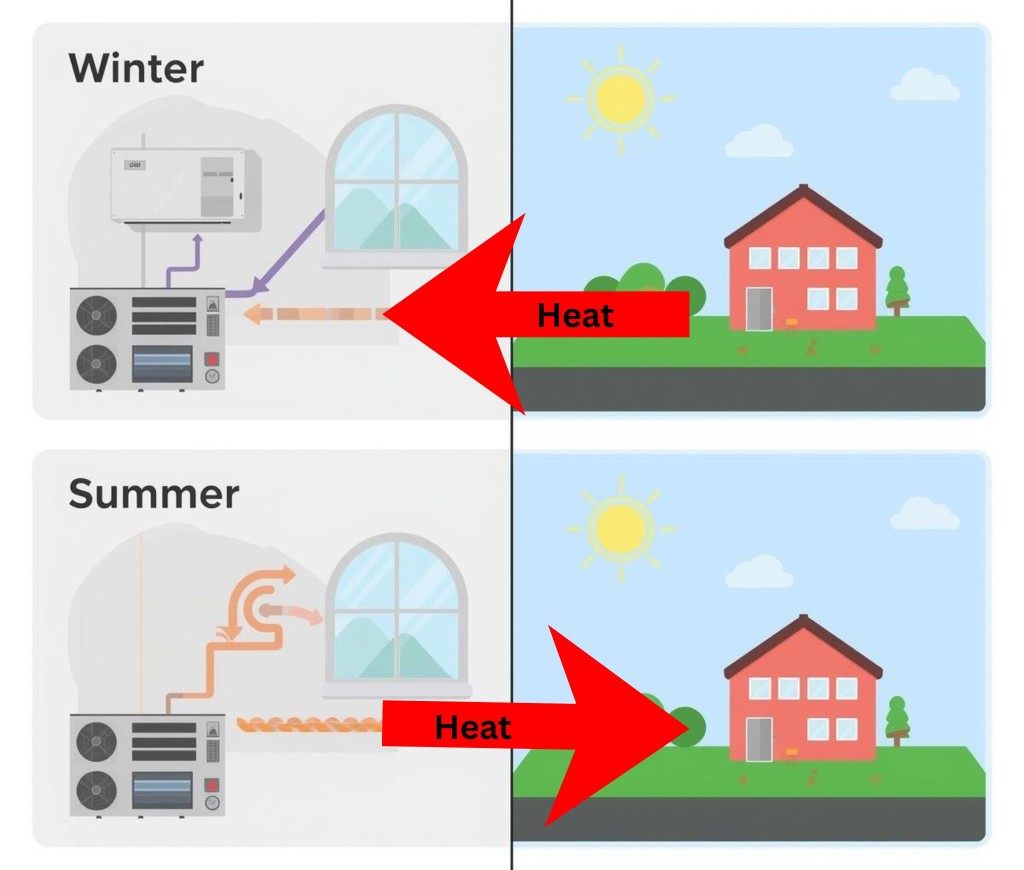
In heating mode, the system extracts available heat from outdoor air and transfers it indoors. In cooling mode, it reverses the process and removes heat from your home.
The result is a simple concept: one system, two jobs, and year-round comfort.
Visual: How a Heat Pump Works
How a Heat Pump Transfers Heat
2. Why a Heat Pump Is Ideal for Kitchener’s Variable Weather
Kitchener homeowners need an HVAC system that can keep up with some of Ontario’s most noticeable seasonal changes. Summers can bring hot, humid days, while spring and fall may alternate between mild temperatures and sudden cold snaps. Winter can then bring prolonged periods of freezing weather.
One System for Changing Conditions
A heat pump is well suited to these fluctuations because it can adjust between heating and cooling as outdoor conditions change. Rather than relying on separate equipment for each season, homeowners can use one primary system to handle much of their annual heating and cooling demand.
Modern cold-climate heat pumps are particularly important for Ontario homes. Unlike older heat pump technology, today's systems are engineered to maintain reliable performance and efficiency in much colder outdoor temperatures.
This makes a heat pump a compelling alternative to simply replacing an aging AC and continuing to depend entirely on conventional heating. For Kitchener homeowners planning their next HVAC upgrade, it offers a more adaptable approach to year-round comfort without being limited to a single season.
3. How Heat Pumps Provide Efficient Cooling in Summer
When Kitchener’s summer temperatures climb, a heat pump works much like a high-efficiency air conditioner. Instead of generating cool air, it removes heat from inside your home and transfers it outdoors. Modern variable-speed technology can also adjust system output to match your home’s cooling needs, helping maintain comfortable temperatures more efficiently.
How Cooling Mode Works
A heat pump reverses its heat-transfer process to remove unwanted heat from your home.
4. How Modern Heat Pumps Heat Your Home in Cold Ontario Winters
Can a heat pump really keep a Kitchener home warm through an Ontario winter? Modern cold-climate heat pumps are designed to do exactly that. By reversing the refrigeration cycle, they extract available heat energy from outdoor air and transfer it indoors, even when temperatures fall below freezing. However, performance depends on choosing the right equipment and having it properly sized and installed for your home.
How Heating Mode Works
The heat pump reverses the refrigeration cycle to bring available heat energy from outdoors into your home.
5. The Benefits of Upgrading From a Traditional AC to a Heat Pump
If your air conditioner is approaching the end of its service life, replacing it with another conventional AC is not your only option. A traditional AC provides cooling, but a heat pump can provide both summer cooling and winter heating, making it a more versatile choice for your next HVAC upgrade.
One System, More Capabilities
A heat pump can offer several advantages over a cooling-only system:
- One all-in-one comfort system: A single system can provide heating and cooling throughout the year.
- Improved energy efficiency: Modern heat pumps are designed to deliver efficient heating and cooling, particularly when properly selected and installed.
- Potentially lower energy bills: More efficient operation can reduce energy consumption, although actual savings depend on your home, existing equipment and energy rates.
- Year-round temperature control: Variable-capacity systems can adjust their output to match changing comfort demands.
- Reduced reliance on fossil fuels: A heat pump can reduce the amount of heating provided by combustion-based equipment.
- Modern variable-speed operation: Many systems can automatically adjust their output instead of repeatedly switching between full capacity and off.
Think Beyond Your Next AC Replacement
If your existing AC is aging or repairs are becoming more frequent, it is worth considering what you want from your HVAC system for the next 10–15 years, not simply replacing what you have today.
Upgrading to a heat pump now could mean entering next year's peak cooling season with a more efficient, flexible, and future-ready system already in place.
6. Heat Pump Installation in Kitchener: What Homeowners Should Know

Installing a heat pump is more involved than simply replacing an existing air conditioner. Professional installation is important because the equipment needs to be properly matched to your home, ductwork and heating requirements. Choosing the right model is only the beginning; how the entire system is designed and installed can significantly affect comfort, efficiency and performance.
What Happens During Installation?
A professional heat pump installation typically involves:
- Home assessment:
The contractor evaluates your home's layout, insulation, existing HVAC equipment and comfort requirements. - Load calculations:
Heating and cooling requirements are calculated to determine the appropriate system capacity. - Equipment selection and sizing:
The heat pump and supporting equipment are selected and sized for your home. - HVAC and ductwork assessment:
Existing ductwork and airflow are checked for compatibility. - Installation and connections:
The outdoor unit is positioned, while refrigerant lines, electrical connections and the indoor coil or air handler are installed. - Controls and commissioning:
The thermostat is configured, the system is tested and operating settings are verified. - Homeowner walkthrough:
The installer explains system operation, controls and basic maintenance requirements.
Why Proper Sizing Matters
An oversized or undersized system can create problems. Improper sizing may lead to uneven temperatures, inefficient operation, excessive cycling or difficulty meeting your home's heating and cooling demands.
For that reason, an experienced HVAC contractor should evaluate the entire system, rather than simply swapping an AC condenser for a heat pump. A whole-home approach helps ensure the new equipment works effectively with your existing infrastructure.
7. Outdoor Heat Pump Placement: Why Location Matters
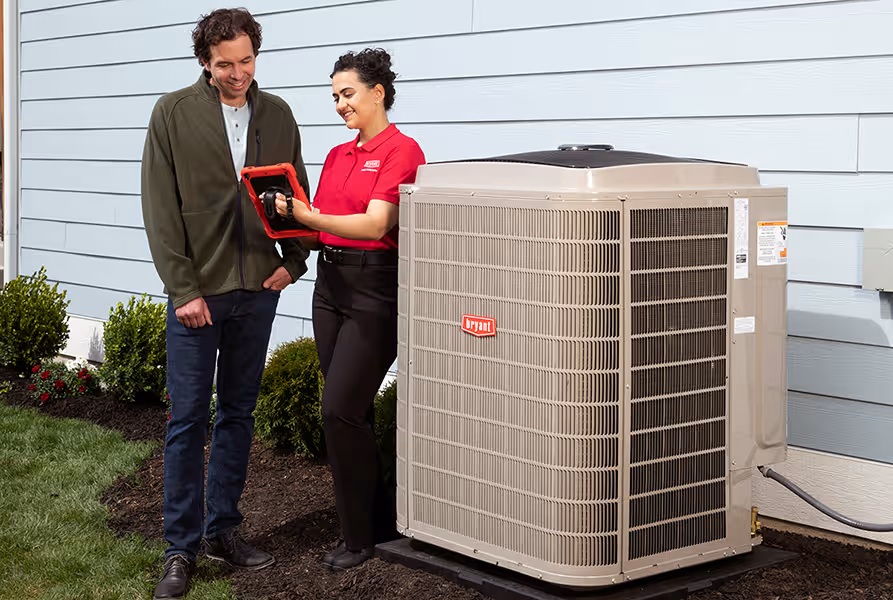
The outdoor unit is a critical part of a heat pump system, and where it is installed can affect how well it performs throughout the year. Unlike simply replacing an AC condenser, heat pump placement needs to account for both summer cooling and winter operation. The unit requires sufficient airflow and a location that can handle Kitchener’s changing weather conditions.
Choosing the Right Location
A professional installer should look for a location that:
- Allows unrestricted airflow so the outdoor coil can exchange heat effectively.
- Provides adequate clearance around the unit to prevent obstructions from limiting performance.
- Allows easy maintenance access for inspections, cleaning and repairs.
- Minimizes excessive snow accumulation, particularly around the outdoor coil and fan.
- Allows proper drainage when moisture produced during winter defrost cycles needs to escape.
- Provides a stable, suitable base that keeps the equipment level and secure.
Designed for Kitchener Winters
Snow, ice, strong winds and repeated freeze/thaw cycles all need to be considered when selecting the installation location. The ideal spot may not be the exact location of an existing AC condenser, particularly if that position is prone to drifting snow, poor drainage or restricted airflow.
Installers should also consider noise and proximity to windows or neighbouring properties when positioning the unit.
Ultimately, proper placement is about more than aesthetics. A well-positioned outdoor unit can support reliable performance, equipment longevity and easier maintenance throughout the year.
8. Integrating a Heat Pump With Your Existing Ductwork
For many Kitchener homeowners, installing a heat pump does not require replacing you home's entire forced-air HVAC system. A properly selected heat pump can often work with an existing furnace, air handler and ductwork, allowing the new equipment to use the home's established air distribution system. In some homes, the existing furnace can also remain in place as a backup heat source, providing additional heating capacity during extremely cold outdoor temperatures.
Assessing Your Existing HVAC System
Before installation, an experienced HVAC contractor should evaluate the components that will work with the new heat pump, including:
- Duct sizing and airflow: The duct system needs to move enough air to support the heat pump's heating and cooling capacity.
- Supply and return configuration: Properly positioned and sized supply and return pathways help distribute conditioned air throughout the home.
- Filter setup: The filter and surrounding cabinet should provide appropriate filtration without unnecessarily restricting airflow.
- Furnace compatibility: The existing furnace should be assessed to determine whether it can operate effectively alongside the selected heat pump.
- Overall ductwork condition: Leaks, restrictions or damaged sections can reduce the system's ability to deliver conditioned air.
Poor airflow can undermine the performance of even a high-efficiency heat pump, potentially affecting comfort and energy consumption.
What About Your Existing Furnace?
Depending on your home and equipment selected, your existing furnace may remain in place as a backup or dual-fuel heating source. This can provide additional flexibility during particularly cold conditions.
The goal is not simply to install a new outdoor unit. It is to create a properly matched heating and cooling system in which the heat pump, indoor equipment and ductwork work together effectively.
9. Heat Pump Energy Savings and Long-Term Costs
The financial case for a heat pump goes beyond its purchase price. Unlike combustion-based heating systems that generate heat by burning fuel, a heat pump uses electricity to move existing heat energy between the outdoors and your home. Under suitable conditions, this can allow a heat pump to deliver multiple units of heat energy for each unit of electricity it consumes.
However, actual energy savings vary from one home to another. You should consider the complete cost of ownership, including installation, expected energy consumption, maintenance and any available incentives. Comparing these factors with the operating cost of the existing heating and cooling system provides a more useful picture of the long-term value.
What Determines Your Actual Savings?
Every home is different, so several factors can influence the long-term cost of operating a heat pump.
10. 2026–2027 Heat Pump Rebates and Incentives in Ontario
For Kitchener homeowners considering a heat pump upgrade, rebates and energy-efficiency incentives can play an important role in reducing the upfront cost. As of 2026, the main provincial program to investigate is the Home Renovation Savings program, delivered through Save on Energy and Enbridge Gas. It currently offers rebates of up to $7,500 for eligible cold-climate air-source heat pumps, with the amount determined by the size of the system. Eligible ground-source heat pumps may qualify for up to $12,000.
Home Renovation Savings: Official Program
Eligibility Can Depend on Your Project
Before assuming you qualify, check the current program requirements. Eligibility may depend on:
- The type and efficiency of the heat pump being installed.
- The homeowner and home's eligibility for the program.
- Installation requirements and whether the contractor must meet specific qualifications.
- Program rules, eligible equipment lists and technical requirements.
- Whether an application, assessment or pre-approval is required before work begins.
For example, Enbridge's current requirements specify that eligible heat pumps must be professionally installed and meet applicable equipment and installation criteria.
Check Before You Sign
Rebate programs can change, so you should verify the 2026–2027 requirements and available amounts before purchasing equipment or signing an installation contract. The federal Oil to Heat Pump Affordability program, for example, closed to new applications on July 31, 2026, illustrating why older rebate information should not be relied upon.
Save on Energy: Funding Finder
Taking incentives into account alongside installation costs and potential energy savings gives you a clearer picture of the total long-term cost of upgrading to a heat pump.
11. Is a Heat Pump Right for Your Kitchener Home?
A heat pump can be an excellent upgrade, but the right HVAC solution depends on your home and your priorities. Factors such as your existing equipment, ductwork, energy use and budget all matter. A professional evaluation from Generations Heating and Air Conditioning can help determine whether a heat pump makes sense on its own or as part of a system that includes your existing furnace.
Signs a Heat Pump Could Be a Good Fit
Consider a heat pump if one or more of these situations sound familiar.
Every Home Needs a Different Approach
There is no single heat pump solution that is right for every Kitchener home. Depending on the existing equipment and heating requirements, your furnace may remain in place as part of a backup or dual-fuel system.
Generations Heating and Air Conditioning can evaluate your existing HVAC system and consider the factors that will influence the best solution for your home.
Upgrade Before Next Year’s Peak Heating and Cooling Season with Generations Heating & AC
If your air conditioner is getting older, now is the time to think beyond another cooling-only replacement. A heat pump is a dual-purpose, year-round HVAC solution that can cool your Kitchener home in summer and help heat it through Ontario’s winter.
Planning your upgrade before the next peak season gives you more time to:
- Compare heat pump options and choose the right system for your home.
- Make sure the equipment is properly sized and selected for your heating and cooling needs.
- Arrange professional installation without the pressure of an emergency replacement.
- Investigate applicable rebates and incentives before purchasing equipment.
- Avoid making rushed HVAC decisions when demand is highest.
Plan Your Heat Pump Upgrade With Generations
Every home has different heating, cooling and comfort requirements. Generations Heating and Air Conditioning can evaluate your existing AC, furnace, ductwork and overall HVAC setup to determine whether a heat pump is the right next step for your home.
If you're considering replacing an aging AC, don't wait until the first major heat wave. Schedule a heat pump consultation with Generations Heating and Air Conditioning and start planning a more efficient, versatile heating and cooling solution for the years ahead.
Reasons to Choose Generations:
If it's the comfort of your house that you're concerned about, you want to work with a company you can trust. At Generations Heating & Air Conditioning, we pride ourselves on offering professional advice, honest service, and dependable help from start to finish.
Local Experts Serving Kitchener and Beyond
We know Kitchener's weather and home styles inside and out. Our recommendations are based on hands-on experience here, not guesswork.
Friendly, Knowledgeable Technicians
Our service pros are highly trained technicians who care about you and your home. We take the time to clearly explain your options and answer your questions so that you feel confident making every decision.
No Pushy Sales Tricks, Just Honest Advice
You'll never be pressured into buying something you don't need. We prioritize what's best for you and your home, not what's easiest to sell.
Start-to-Finish Service
From the moment you receive your quote to long after your new system is installed, we're with you. Expect clear communication, tidy work, and follow-up service you can trust.
Ready to experience the Generations difference? Book a free consultation today and get the best home comfort for your needs and budget.

What Our Customers Are Saying...
"We trust Generations to maintain our HVAC system. Their service is prompt, professional, and friendly. They are also very genuine when it comes to purchases, explaining the pros and cons of each model, with zero pressure/upselling.
If you’re looking for an honest, reliable HVAC company that genuinely cares about its customers, then Generations fits the bill."
-Michele A.
"Scott and his team provided excellent service when our furnace unexpectedly quit in the very cold days of February. Excellent communication through the entire process put our minds at ease knowing we would be looked after! We would highly recommend Generations for both their service and new installations!"
-Gavin Albrecht
"Generations is my go-to for furnace and air conditioning maintenance and repairs. Recently Rob and the Co-op student came to my house for my furnace’s yearly maintenance checkup. They interacted with me in a friendly and respectful manner, communicating clearly as they told me about my furnace and answered my questions. Scott is always friendly when I call to set up my appointments. I find their prices to be fair. If you need help with heating or cooling, I recommend that you call Generations."
-Elain Mason