Is Your AC Running But Not Lowering the Temperature? Here’s What It Really Means

When your air conditioner is running nonstop, but your home still won’t cool down, it’s more than just frustrating; it’s a sign that something isn’t working the way it should. Many homeowners assume their AC is fine because it’s “on,” but in reality, several underlying issues can prevent it from actually lowering the temperature. In this guide, we’ll break down what’s really happening, what warning signs to watch for, and when it’s time to call in a professional.
- What It Means When Your AC Runs But Doesn’t Cool
- Common Causes of an AC Running But Not Lowering Temperature
- Warning Signs You Shouldn’t Ignore
- Safe Troubleshooting Steps Homeowners Can Try
- Why Most AC Issues Require a Professional
- Why You Shouldn’t Wait to Fix the Problem
- When to Call Generations Heating & Air Conditioning
If your AC is running but not lowering the temperature in your home, contact Generations Heating & Air Conditioning today.
Key Takeaways: Pool Heater Repair
- An AC running without lowering the temperature usually indicates an underlying issue rather than normal operation.
- Common causes include refrigerant problems, frozen coils, airflow restrictions, thermostat issues, compressor faults, duct leaks, or incorrect system sizing.
- Warning signs such as constant operation, warm airflow, ice buildup, rising humidity, or unusual noises should not be ignored.
- Homeowners can safely check filters, thermostat settings, vents, and the outdoor unit, but most deeper issues require professional diagnosis.
- Delaying repairs can lead to higher energy bills, increased system strain, and a higher risk of complete system failure.
- Professional service helps restore efficiency, prevent further damage, and ensure long-term system reliability.
1. What It Means When Your AC Runs But Doesn’t Cool
When your air conditioner is running, but your home isn’t getting cooler, it usually means the system is operating, but not doing its primary job effectively. Understanding the difference between “running” and “cooling” is key to identifying the issue early.
Your AC Should Do More Than Just Run
At its core, your air conditioner is designed to remove heat from your home, not just move air around. A properly functioning system actively cools your indoor space by cycling refrigerant and transferring heat outdoors.
Here’s what your AC is supposed to be doing when it’s working correctly:
- Your system should pull warm air from inside your home and pass it over cold evaporator coils.
- The refrigerant inside the coils should absorb heat and carry it outside to be released.
- The system should then circulate cooled air back into your home through the ductwork.
If all of these steps are working together, your home should steadily reach and maintain your desired temperature. If not, something in that process is being disrupted.
Running Doesn’t Always Mean Cooling
It’s important to understand that just because your AC is “on” doesn’t mean it’s actually cooling your home. In many cases, the system is operating in a limited or ineffective way.
Here are a few reasons why your AC may be running without properly cooling:
- Your system may be circulating air without removing enough heat from it.
- A component like the compressor or refrigerant system may not be functioning properly.
- Airflow restrictions may be preventing cooled air from reaching your living spaces.
These situations can make it feel like your AC is working, even though it’s not delivering real cooling performance.
A Warning Sign of Inefficiency or Bigger Problems
An air conditioner that runs constantly without lowering the temperature is often a sign that something is wrong beneath the surface. While the issue may start small, it can quickly lead to bigger problems if ignored.
This type of behaviour often indicates the following:
- Your system is working harder than it should to try to reach the set temperature.
- Energy usage is increasing, which leads to higher utility bills.
- Key components may be wearing down faster due to continuous operation.
Catching this issue early can help prevent more expensive repairs and ensure your system continues to run efficiently when you need it most.
2. Common Causes of an AC Running But Not Lowering Temperature
When your air conditioner is running continuously but the temperature inside your home is not improving, there are several common underlying issues that could be responsible. These problems range from simple maintenance issues to more serious mechanical faults that require professional repair.
Common Reasons Your AC Is Running but Not Cooling
Refrigerant Issues
Low refrigerant or leaks prevent proper heat absorption and cooling.
Frozen Coils
Ice buildup blocks heat transfer and stops the cooling process.
Airflow Problems
Dirty filters or blocked vents reduce system efficiency.
Compressor Issues
A failing compressor stops proper refrigerant circulation.
Duct Leaks
Cooled air escapes before reaching your living spaces.
Wrong System Size
An undersized or oversized unit cannot maintain proper cooling.
Low Refrigerant or Refrigerant Leaks
Refrigerant is the chemical that allows your air conditioner to absorb heat from inside your home and release it outside. When levels are too low or there is a leak, the system cannot complete the cooling process effectively.
Here are the most common signs of refrigerant-related issues:
- Your AC may blow warm or room-temperature air from the vents even while running continuously.
- You may hear a faint hissing or bubbling sound coming from the refrigerant lines.
- Ice may begin to form on the refrigerant lines or outdoor unit due to pressure imbalances.
These symptoms indicate a serious issue that requires professional diagnosis and repair, as refrigerant problems do not resolve on their own.
Frozen Evaporator Coils
Evaporator coils are responsible for absorbing heat from the air inside your home, but they can freeze when something disrupts normal airflow or refrigerant levels.
Coils typically freeze due to restricted airflow or low refrigerant, and when they do, cooling performance drops significantly or stops altogether.
Common signs of frozen evaporator coils include:
- Ice visibly forming on the indoor unit or refrigerant lines.
- Noticeably reduced airflow coming from your vents.
- The system running continuously without effectively cooling the home.
If frozen coils are suspected, the system should be turned off and inspected by a professional to prevent further damage.
Dirty Air Filters & Airflow Restrictions
Proper airflow is essential for your air conditioner to function efficiently, and anything that restricts airflow can significantly reduce cooling performance.
Airflow issues often develop gradually due to lack of maintenance or blocked ventilation.
Common causes of airflow restriction include:
- Air filters becoming clogged with dust and debris over time.
- Supply or return vents being blocked by furniture or closed off unintentionally.
- Dirt and buildup accumulating on the indoor or outdoor coils.
When airflow is restricted, your system struggles to circulate cooled air evenly throughout your home.
Thermostat Issues or Incorrect Settings
Sometimes the problem is not with the air conditioner itself but with the thermostat controlling it. Incorrect settings or faulty readings can prevent proper cooling cycles from activating.
Thermostat-related issues can be subtle but impactful on overall performance.
Common thermostat problems include:
- The system running without properly triggering the cooling cycle when the desired temperature is reached.
- Incorrect mode settings such as “fan only” instead of “cooling.”
- Confusion between fan settings, which circulate air, and cooling settings, which actively lower temperature.
Checking thermostat settings is a simple first step, but persistent issues may indicate a faulty unit.
Compressor Problems
The compressor is one of the most important components in your air conditioning system, as it is responsible for pressurizing and circulating refrigerant.
When the compressor is not working properly, the entire cooling process is affected.
Signs of compressor issues include:
- The AC running continuously but only blowing warm or mildly cool air.
- Unusual noises such as clicking, grinding, or rattling coming from the outdoor unit.
- The outdoor unit failing to engage or operate properly when the system is on.
Compressor issues are serious and typically require professional repair or replacement.
Leaky or Poorly Insulated Ductwork
Your ductwork is responsible for delivering cooled air throughout your home, but leaks or poor insulation can allow that cooled air to escape before it reaches its destination.
This results in uneven cooling and reduced system efficiency.
Common signs of ductwork problems include:
- Some rooms in the home feeling cool while others remain warm.
- Noticeably higher energy bills without an obvious change in usage.
Duct issues are often hidden within walls or ceilings, making professional inspection important for accurate diagnosis.
Incorrect System Size (Oversized or Undersized AC)
Your air conditioner must be properly sized for the home in order to cool effectively and efficiently. If the system is too small or too large, performance problems are almost guaranteed.
Sizing issues affect both comfort and long-term system health.
The effects of incorrect sizing include:
- Undersized systems running constantly but never reaching the desired temperature.
- Oversized systems cooling too quickly and shutting off frequently, which reduces humidity control and comfort.
Proper system sizing is critical for consistent cooling performance and energy efficiency.
Understanding these common causes can help you identify why your AC is running but not effectively cooling your home, but most of these issues require professional diagnosis to resolve correctly.
3. Warning Signs You Shouldn’t Ignore
When your air conditioner is running but not properly cooling your home, there are often early warning signs that point to a developing issue. Paying attention to these symptoms can help you avoid more serious damage and costly repairs.
Warning Signs You Shouldn’t Ignore
- Your AC runs constantly but never reaches the set temperature.
- Your energy bills are increasing without changes in usage.
- Air coming from vents feels warm or inconsistent.
- You notice ice buildup or unusual noises from the system.
- Indoor humidity levels are rising despite the AC running.
These symptoms often indicate a developing issue that should be inspected promptly.
AC Runs Constantly Without Reaching the Set Temperature
One of the most common signs of a problem is when your system never seems to shut off because it cannot reach the temperature you have set.
This often looks like the following:
- Your air conditioner runs for long periods without cycling off, even when the thermostat setting has already been reached.
- Your home remains consistently warmer than the temperature displayed on the thermostat.
- The system appears to be working harder than usual with little to no improvement in comfort.
If your system is constantly running without achieving the desired temperature, it is a clear sign that something is preventing proper cooling.
Rising Energy Bills
Another key warning sign is an unexplained increase in your energy bills, especially during periods when your usage habits have not changed. Higher costs often indicate that your system is working inefficiently.
- Your monthly hydro or electricity bills begin to increase without a clear reason.
- Your air conditioner runs for longer cycles to maintain basic comfort levels.
- You notice a steady upward trend in energy usage during the cooling season.
Rising energy costs often go hand in hand with reduced system efficiency and should not be ignored.
Warm or Inconsistent Airflow
Your AC should deliver consistent, cool air throughout your home, so any changes in airflow temperature or strength are a concern. These issues can present in several ways:
- Air coming from your vents feels warm or only slightly cool instead of properly chilled.
- Different rooms in your home experience uneven cooling, with some areas feeling much warmer than others.
- Airflow from vents feels weak or inconsistent even when the system is running.
Inconsistent airflow is often a sign of underlying system or ductwork issues.
Ice Buildup or Unusual Noises
Visible ice or strange sounds coming from your system are clear indicators that something is not functioning correctly. These symptoms usually point to mechanical or airflow-related problems.
- Ice forms on the indoor unit, refrigerant lines, or outdoor components of the system.
- You hear unusual noises such as rattling, buzzing, hissing, or grinding during operation.
- The system may behave unpredictably, switching between normal and abnormal operation.
If you notice ice or unusual noises, it is important to turn the system off and have it inspected promptly.
Increasing Indoor Humidity
Your air conditioner also plays a key role in controlling indoor humidity, so changes in moisture levels can indicate a problem. When the system is not functioning properly, humidity often increases noticeably.
- The air inside your home feels damp, sticky, or uncomfortable even when the AC is running.
- Windows may show signs of condensation more frequently than usual.
- The overall indoor environment feels less comfortable despite continuous cooling attempts.
Rising indoor humidity often signals that your AC is no longer effectively removing moisture from the air.
Recognizing these warning signs early can help prevent more serious system damage and ensure your air conditioner is repaired before the issue worsens.
4. Safe Troubleshooting Steps Homeowners Can Try
Before calling for service, there are a few simple and safe checks you can perform that may help improve performance or identify obvious issues. These steps won’t fix deeper mechanical problems, but they can rule out basic causes and help your technician diagnose the issue faster.
Safe Troubleshooting Steps
If issues persist after these steps, professional service is recommended.
Check and Replace Air Filters
One of the easiest and most common issues that affects cooling performance is a dirty or clogged air filter.
Start by inspecting your filter and taking the following steps:
- You should check your air filter to see if it is visibly dirty, grey, or clogged with dust and debris.
- You should replace the filter if it has not been changed within the last one to three months, depending on usage and home conditions.
- You should ensure the new filter is installed correctly with proper airflow direction.
Keeping your filter clean helps maintain proper airflow and system efficiency, but if the issue continues after replacement, the problem is likely deeper.
Ensure the Thermostat Is Set Correctly
Sometimes cooling issues are caused by incorrect thermostat settings rather than a mechanical failure. Before assuming a larger problem, check the following:
- You should confirm that the thermostat is set to “cooling” mode rather than “fan only” or “heat.”
- You should make sure the temperature setting is lower than the current room temperature to properly trigger cooling.
- You should check that the fan setting is on “auto” rather than “on” to ensure the system cycles correctly.
Correct thermostat settings are essential, but if your system still struggles after adjustments, further inspection is needed.
Inspect Vents and Registers for Blockages
Blocked or closed vents can restrict airflow and reduce cooling efficiency throughout your home. A quick visual inspection can help identify simple issues:
- You should ensure that all supply and return vents are fully open and not accidentally closed.
- You should check that furniture, curtains, or rugs are not blocking airflow from vents.
- You should make sure vents are free from dust buildup or obvious obstructions.
Proper airflow is critical for even cooling, and while this step is simple, it can make a noticeable difference.
Look for Visible Ice on the Unit
Ice buildup is a sign that your system is not functioning correctly and should be addressed immediately. If you notice freezing, take the following precautions:
- You should turn the system off immediately if you see ice forming on the indoor unit or refrigerant lines.
- You should allow the system to thaw completely before attempting to restart it.
- You should avoid repeatedly running the system while it is frozen, as this can cause further damage.
Ice formation is usually a symptom of a larger issue and should be inspected by a professional once the system is safely thawed.
Make Sure the Outdoor Unit Is Clear of Debris
Your outdoor condenser unit needs proper airflow to release heat effectively, and obstructions can significantly reduce performance. A quick inspection around the unit can help prevent issues:
- You should check that leaves, grass, dirt, or other debris are not blocking the outdoor unit.
- You should ensure there is at least a clear space around the unit for proper airflow.
- You should gently remove any visible debris without damaging the fins or internal components.
Keeping the outdoor unit clear helps maintain efficiency, but persistent cooling issues will still require professional diagnosis.
These simple troubleshooting steps can help rule out basic issues, but most cases of an AC running without properly cooling require a trained technician to identify and fix the root cause safely and effectively.
5. Why Most AC Issues Require a Professional
While there are a few basic troubleshooting steps you can safely take, most issues that cause an air conditioner to run without properly cooling require professional attention. Modern AC systems are complex, and attempting advanced repairs without the right training can often make the problem worse.
Refrigerant Handling Requires Certification
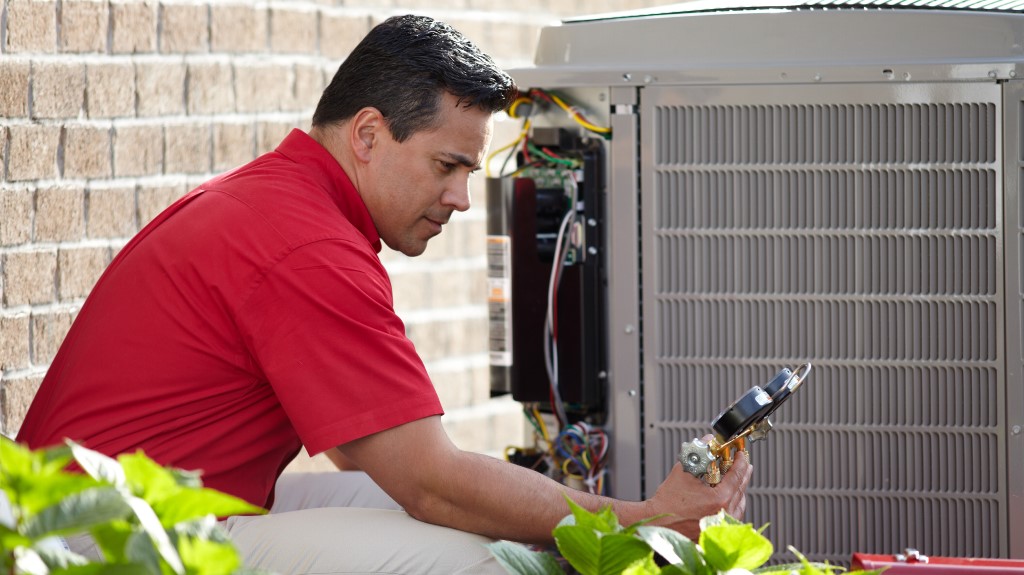
Refrigerant is a controlled substance, and handling it safely requires specialized tools and certification. This is not something that can be safely managed as a DIY repair. Here’s why professional involvement is necessary:
- Refrigerant levels must be measured precisely using specialized diagnostic equipment that most homeowners do not have.
- Any leaks must be properly located, repaired, and sealed before refrigerant can be safely recharged.
- Only certified technicians are legally allowed to handle, recover, or recharge refrigerant in HVAC systems.
Because refrigerant directly affects system performance and safety, this type of repair should always be left to a licensed professional.
Electrical and Compressor Issues Are Complex and Risky
Many of the more serious causes of cooling problems involve electrical components or the compressor, both of which require technical expertise to diagnose and repair safely. These systems carry significant risks if handled incorrectly:
- Electrical components operate at high voltage and can pose a serious safety hazard if improperly handled.
- The compressor is a critical and expensive part of the system that requires precise diagnostics and repair procedures.
- Incorrect handling of these components can lead to further system damage or complete failure.
Because of the complexity and safety concerns, these issues should always be addressed by trained HVAC professionals.
Improper DIY Fixes Can Cause More Damage or Void Warranties
Attempting to fix an air conditioning system without proper training can often lead to unintended consequences that make the situation worse. You should be aware of the risks involved:
- Incorrect repairs can cause additional damage to sensitive components, increasing overall repair costs.
- Many manufacturers require professional service to keep warranties valid, meaning DIY repairs can void coverage.
- Temporary fixes may mask the real issue, allowing underlying problems to worsen over time.
In most cases, what seems like a simple fix can lead to much more expensive repairs if not handled correctly.
Professional Diagnostics Save Time and Money Long-Term
While calling a professional may seem like an added expense, it often results in faster, more accurate solutions that prevent repeat issues. Professional service provides clear advantages:
- Technicians use specialized tools to quickly identify the root cause of cooling problems.
- Proper diagnostics help avoid unnecessary part replacements or trial-and-error repairs.
- Early intervention can prevent minor issues from turning into major system failures.
In the long run, professional diagnosis ensures your system runs efficiently and helps reduce overall repair and energy costs.
For most AC problems involving poor cooling performance, professional service is the safest and most effective way to restore comfort and protect your system.
6. Why You Shouldn’t Wait to Fix the Problem
When your air conditioner is running but not effectively lowering the temperature, it can be tempting to delay repairs especially if the system is still technically “working.” However, postponing service often leads to bigger problems, higher costs, and reduced system lifespan.
Increased Energy Consumption and Higher Utility Bills
An inefficient air conditioner has to work much harder to achieve the same level of cooling, which directly impacts your energy usage. Here’s what typically happens when the issue is left unresolved:
- Your system runs for longer cycles, consuming more electricity to try to reach the set temperature.
- Your monthly utility bills increase even though your cooling performance continues to decline.
- Your home becomes less comfortable despite higher energy usage.
Over time, these increased operating costs can add up significantly, making early repair the more cost-effective option.
Added Strain on System Components
When your AC is forced to run continuously without properly cooling, it puts unnecessary stress on critical components. This strain can lead to ongoing wear and tear, including:
- Your compressor and fan motors working harder than designed for extended periods.
- Internal components experiencing accelerated wear due to constant operation.
- Increased likelihood of small issues developing into larger mechanical failures.
Continued strain on the system often shortens its overall lifespan and reduces reliability.
Risk of Complete System Failure
What starts as a cooling issue can quickly escalate into a full system breakdown if not addressed in time. This is especially concerning because:
- A struggling system may eventually stop cooling altogether during peak demand periods.
- Key components such as the compressor or refrigerant system may fail completely under stress.
- Emergency breakdowns often occur at the worst possible time, such as during extreme heat.
Addressing the issue early can help prevent a total system failure and avoid emergency repair situations.
More Expensive Repairs If Ignored
Delaying repairs often turns a minor issue into a much more expensive problem to fix. The longer the system runs inefficiently, the more likely you are to face:
- Compounded damage affecting multiple components instead of a single repair point.
- Higher labour and parts costs due to more extensive system damage.
- Potential need for partial or full system replacement in severe cases.
Prompt repairs are almost always more affordable than waiting until the problem worsens.
Ignoring cooling issues rarely makes them go away. In most cases, acting quickly helps protect both your comfort and your investment in your HVAC system.
7. When to Call Generations Heating & Air Conditioning
Delaying pool heater repair might seem harmless in the spring, but it often leads to costly and frustrating consequences right when you need your system the most. In a short Southern Ontario summer, even a few days of downtime can have a big impact on your enjoyment and overall costs.
If your system is showing any of the signs discussed in this post, contacting Generations Heating & Air Conditioning can help restore comfort quickly and prevent more costly breakdowns in the future.
Reasons to Choose Generations:
If it's the comfort of your house that you're concerned about, you want to work with a company you can trust. At Generations Heating & Air Conditioning, we pride ourselves on offering professional advice, honest service, and dependable help from start to finish.
Local Experts Serving Kitchener and Beyond
We know Kitchener's weather and home styles inside and out. Our recommendations are based on hands-on experience here, not guesswork.
Friendly, Knowledgeable Technicians
Our service pros are highly trained technicians who care about you and your home. We take the time to clearly explain your options and answer your questions so that you feel confident making every decision.
No Pushy Sales Tricks, Just Honest Advice
You'll never be pressured into buying something you don't need. We prioritize what's best for you and your home, not what's easiest to sell.
Start-to-Finish Service
From the moment you receive your quote to long after your new system is installed, we're with you. Expect clear communication, tidy work, and follow-up service you can trust.
Ready to experience the Generations difference? Book a free consultation today and get the best home comfort for your needs and budget.

What Our Customers Are Saying...
"What a great team - they installed our pool heater this summer....and now just came to the rescue when our furnace broke in the dead of winter in the middle of the night - found a board and replaced it right away. Great nice friendly and efficient service."
-Alison Wills
"We trust Generations to maintain our HVAC system. Their service is prompt, professional, and friendly. They are also very genuine when it comes to purchases, explaining the pros and cons of each model, with zero pressure/upselling.
If you’re looking for an honest, reliable HVAC company that genuinely cares about its customers, then Generations fits the bill."
-Michele A.
"I had a problem with my millivolt pool heater. I called Generations Heating and A/C They came within two days, Rob the technician was polite, professional and very competent. He had the problem solved in no time. The price was very reasonable. I have no hesitation in recommending or calling Generations Heating and A/C again.
Excellent work !"
-Jimmy M